


Misplacing your keys or forgetting a name now and then is a normal part of getting older. But when memory changes start affecting daily life, families often ask a harder question: is this just normal aging, or could it be something more, like Alzheimer’s disease or another form of dementia?
There’s no single moment that makes that answer clear. It’s usually a pattern of small changes that add up over time. Here are some early signs of dementia or Alzheimer’s that families and caregivers should pay close attention to.
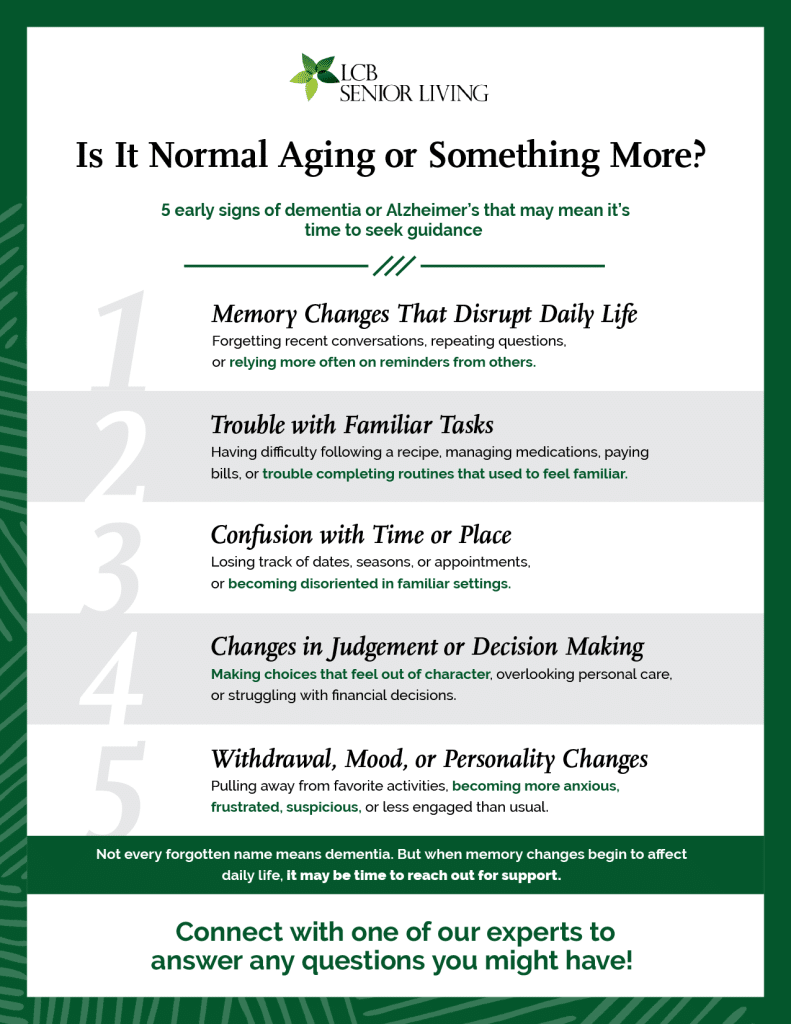
- Memory changes that disrupt daily life. Everyone forgets things occasionally, but repeating the same question within minutes, forgetting recent conversations, or needing frequent reminders to keep track of day-to-day responsibilities is different. This kind of memory loss that affects daily routines is one of the most common early signs of Alzheimer’s.
- Trouble with familiar tasks. Struggling to follow a recipe that’s been made dozens of times, missing medication doses, or having a harder time paying bills can point to more than just simple distraction. When once-familiar routines start to feel unfamiliar, it’s worth paying closer attention.
- Confusion with time or place. Losing track of the date, season, or an upcoming appointment is one thing. Becoming disoriented in a familiar neighborhood or forgetting how they got somewhere is another. Confusion with time or place is a hallmark sign of cognitive decline that should never be brushed aside.
- Changes in judgment or decision making. Making choices that feel out of character, falling for scams more easily, neglecting personal hygiene, or struggling with financial decisions can all signal changes in judgment tied to dementia or Alzheimer’s.
- Withdrawal, mood, or personality changes. Pulling away from hobbies and social activities, or becoming more anxious, frustrated, suspicious, or withdrawn than usual, can be just as telling as memory loss itself. These shifts are sometimes the first changes families notice, even before memory issues become obvious.
What If You Notice These Signs in a Parent or Loved One?
Not every forgotten name or misplaced item means dementia. Normal aging can result in some slowing down. But when memory changes begin to interfere with daily life, work, or relationships, it may be time to seek help.
If your parent is showing signs of dementia, you’re not alone. A geriatric care specialist or primary care physician can help determine whether these changes point to Alzheimer’s disease, another form of dementia, or something else entirely treatable.
Knowing when to consider memory care can feel overwhelming, but earlier conversations often lead to more options, more time to plan, and less stress for the entire family.
Trust What You’re Noticing
Families are often the first to notice these changes, sometimes long before a diagnosis is ever discussed. That instinct, the sense that something feels off, is worth trusting. Paying attention now, rather than waiting for a crisis, gives everyone involved more time, more clarity, and more peace of mind moving forward. Whether these changes turn out to be normal aging or something more, understanding what you’re seeing is always a meaningful first step.