

What if the most meaningful moments in your family’s story were never photographed? And, what if a faded photograph could help a loved one tell a story they haven’t shared in years?
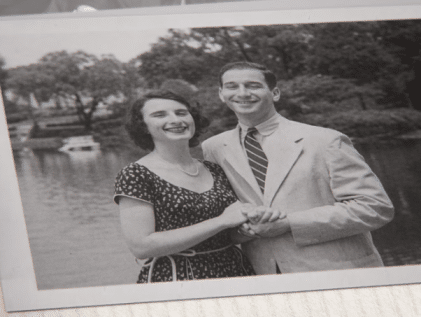
A recent short documentary, Love, Rendered, explored this idea by following Burt and Ethelle Shatz, a couple married for more than 70 years and who now live at LCB Senior Living’s The Residence at Selleck’s Woods in Darien, CT, as they navigate Burt’s cognitive decline. Among his fading memories is the day they met at a student co-op in Cleveland, a moment no camera ever caught. Filmmakers used AI to restore old black-and-white photos of the couple, then applied their present-day mannerisms to their younger selves, with Ethelle correcting details until the scene felt true. The same kinds of tools are now available to families at home.
The film, which recently premiered as an official selection at the Telluride Film Festival, was directed by the Emmy and Academy Award-nominated Liz Garbus.
Why Reminiscing Matters
Reminiscence therapy uses familiar prompts, like photographs or music, to evoke memories and stimulate conversation. The Cochrane Review examines how this approach affects individuals living with dementia. Long-ago memories often stay accessible after recent ones slip, which is why a song from 1962 or a wedding photo can open a door that a direct question can’t.
Technology gives families new ways to build those prompts.
Bringing It Home
- Restore the photos you have. Scan old prints, then use a restoration tool (the Gemini app is one example) to sharpen, repair, and colorize them. Seeing a faded portrait in full color can spark stories that a dim original never did.
- Bring photos to life. Some tools can gently animate a still photo. Watching a parent or grandparent as a young adult, smiling and moving, can be a moving experience for everyone in the room.
- Pair images with music. Build a slideshow set to songs from the individual’s youth. Music and images together tend to draw out more than either alone.
- Capture voices while you can. Record short conversations about a first job or a childhood street. Even a phone’s voice memo app works, and the recordings become keepsakes for the whole family.
A Few Guiding Principles
Treat these tools as conversation starters, not tests. There’s no need to quiz anyone on names or dates. Simply share the photo and let the individual lead. If they correct a detail, like the color of a dress or the layout of a kitchen, welcome it. Their version of the story matters most.
It’s also worth remembering that a restored or animated image is an interpretation, not a perfect record. Its value lies in the connection it creates.
The best technology in this space doesn’t replace time together. It gives that time a little more to work with.
So which photo would you start with?