

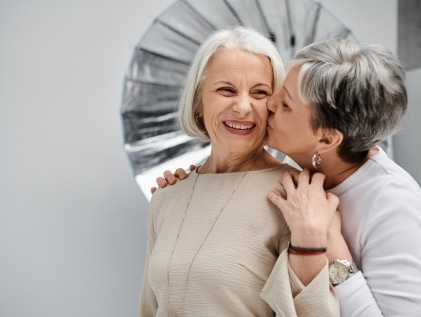
June is Pride Month – a time to honor identity, community, and the freedom to live authentically. Yet for many LGBTQ+ older adults, Pride also brings up deeper questions about aging: Where will I live? Will I be safe? And will I be seen for who I am?
These are questions no one should have to ask later in life. But for millions of LGBTQ+ seniors, they remain top of mind when exploring senior living options.
Why LGBTQ+ Inclusion in Senior Living Matters
The need for inclusive communities is growing quickly. According to LGBTQ Nation, an estimated 3.6 million LGBTQ+ people over 50 live in the United States today – a number expected to reach 7 million by 2030. That’s a rapidly expanding population with unique life experiences and care needs.
Many LGBTQ+ seniors lived through decades of discrimination, which can make the transition to senior living feel intimidating. Research from SAGE (Services & Advocacy for LGBTQ+ Elders) shows LGBTQ+ older adults are twice as likely to live alone and four times less likely to have children than their heterosexual peers – factors that can heighten the risk of isolation and make inclusive community design especially important.
At the same time, LGBTQ+ elders face higher rates of depression, social isolation, and chronic health conditions – challenges often intensified by the fear of encountering bias in care settings. Some even feel pressure to hide their identity or “go back into the closet” to feel safe. That’s not the retirement anyone deserves, and it’s why creating affirming senior living environments matters so deeply.
All this reinforces a simple truth: inclusion shouldn’t be a luxury – it’s something seniors should feel in their daily lives. And when families begin touring senior living communities, they often wonder how to tell whether a community is truly welcoming or simply signaling support. That’s where clear, concrete indicators of inclusion become essential.
What Does an Inclusive Community Actually Look Like?
When touring senior living communities, it’s worth looking beyond surface-level symbols. True inclusion is built into everyday practices and policies. Things to look for include:
- Clear nondiscrimination policies that explicitly protect sexual orientation and gender identity
- Staff training in LGBTQ+ cultural competency to ensure affirming, respectful care
- Rooming policies that welcome same-sex couples without hesitation
- Resident programming that celebrates diverse identities and histories
- Partnerships with local LGBTQ+ organizations to strengthen community connections
When these elements come together, they create more than a checklist – they build a culture. And it’s that culture of everyday respect and belonging that truly shapes a resident’s experience.
A Community Where Everyone Belongs
At its core, a great senior living community is one where every resident feels at home – where friendships grow naturally, identities are honored, and no one is made to feel like an outsider.
This Pride Month, and every month following, we believe inclusive communities aren’t just the right thing to build – they’re the foundation of excellent care. Because when people feel safe, seen, and celebrated, they thrive.